
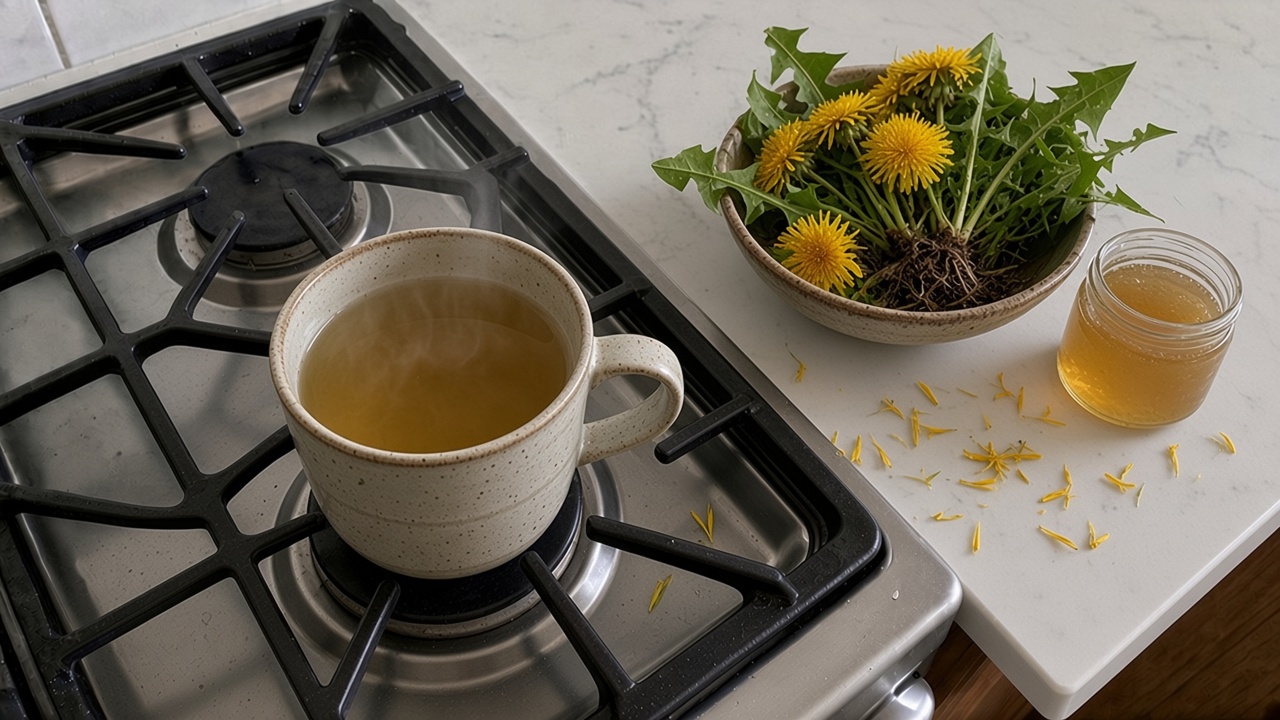
Is dandelion tea good for you? It can be a nice, caffeine-free addition to your routine with some potential perks, but the honest answer is that most of the evidence is still early, coming from lab, animal, or small studies rather than strong human clinical trials. In this guide I’ll walk through the potential dandelion tea benefits, the real risks and medication interactions to know about, how to make dandelion tea, and whether homemade dandelion jelly counts as a health food. Spoiler: it’s a treat.
Allergens: Contains: dandelion (daisy family; skip it if you react to ragweed, chamomile or daisies); the jelly adds sugar, pectin and lemon. Free of: peanuts, tree nuts, dairy, eggs, wheat.
Jump to How to Make Dandelion Tea
Health note: This post is for general information, not medical advice. If you’re pregnant or breastfeeding, take medications, or have gallbladder, kidney, or other health conditions, talk with your doctor before drinking dandelion tea.
What Is Dandelion Tea?
Dandelion tea is usually brewed from the dried roots, the leaves, or a blend. Roasted root tea has a deeper, coffee-like flavor, while leaf or flower tea is lighter. The dandelion plant itself contains vitamins (like A, C, and K), minerals (like potassium), and plant compounds such as polyphenols and flavonoids. How much of that ends up in a cup of tea varies.
Potential Dandelion Tea Benefits
These come from traditional use and early research. They’re possibilities, not proven cures:
- Antioxidant and anti-inflammatory compounds: These may help with oxidative stress and inflammation.
- Mild diuretic effect: Dandelion leaf may increase urine output, which may help with temporary bloating. One small study noted this.
- Liver and digestion: Some animal and test-tube studies suggest it may support the liver and bile flow and ease mild indigestion.
- Blood sugar and cholesterol: Early research hints at possible effects, but it’s far from settled.
- Caffeine-free: A warm, cozy alternative to coffee in the afternoon.
The National Center for Complementary and Integrative Health notes there’s little high-quality human evidence for specific medical uses like “detox” or disease treatment, so take marketing claims with a grain of salt.
Dandelion Tea Side Effects and Who Should Be Careful
- Allergies: Dandelion is in the daisy family. If you react to ragweed, daisies, chamomile, or similar plants, be cautious.
- Stomach upset: Some people get heartburn, an upset stomach, or diarrhea.
- Medication interactions: It may interact with diuretics, blood thinners, diabetes medications, lithium, and some antibiotics, and in high amounts it may lower blood sugar or affect potassium.
- Quality: Some commercial teas have been flagged for heavy-metal contamination. Choose reputable brands, or forage from clean areas.
- Pregnancy, breastfeeding, and gallbladder or kidney issues: Check with your doctor first.
Stick to typical tea amounts, a cup or a few a day, unless your doctor advises otherwise.
Foraging Dandelions Safely
- Only pick from unsprayed areas. Skip roadsides and any lawn treated with chemicals.
- Be sure of your identification. Use a trusted local foraging guide, and when in doubt, don’t pick.
- Rinse well and dry the leaves or roots thoroughly if you’re storing them.
What You’ll Need to Make Dandelion Tea
- Dried dandelion root or leaf (foraged or store-bought loose-leaf tea)
- A tea infuser, tea ball, or teapot with a strainer
- A kettle
- Glass jars for storing dried dandelion
How to Make Dandelion Tea


Simple Homemade Dandelion Tea
Ingredients
Method
- Place the dried dandelion in a mug or teapot (use a tea ball or strainer for loose pieces).
- Pour hot water over it and steep 5 to 10 minutes, to taste. For roots, you can gently simmer them in the water for a stronger, more coffee-like brew.
- Strain, and sweeten lightly with honey or add lemon if you like.
Notes
Is Dandelion Jelly Good for You?
Dandelion jelly is made by steeping the bright yellow flower petals into a tea-like infusion, then cooking it with sugar, pectin, and lemon. It tastes mildly honey-like and floral, and it’s a fun way to use a spring harvest. But it’s not really a health food. Recipes typically use a lot of sugar, which makes it more like jam, and any benefits from the flowers are diluted. Enjoy it as a seasonal treat, not a daily health booster. The same allergy and foraging cautions apply.
Keeping sugar low? Plain dandelion tea is the better everyday choice. For a lower-sugar spread, my strawberry raspberry chia jam lets you control the sweetness. Or stir a little into chia seed pudding.
More from the Homestead
Lots of eggs from the backyard flock? Try my freezer egg patties for easy make-ahead breakfasts.
Dandelion Tea FAQ
What are the benefits of dandelion tea?
Possible benefits include antioxidant compounds, a mild diuretic effect, and digestive support, but the evidence is mostly preliminary.
Is it safe to drink dandelion tea every day?
In typical tea amounts, it’s generally considered safe for most healthy adults. Check with your doctor if you take medications or have health conditions.
Does dandelion tea have caffeine?
No. It’s naturally caffeine-free.
Who should not drink dandelion tea?
People allergic to ragweed or daisy-family plants, people taking diuretics, blood thinners, diabetes medications, or lithium, and anyone pregnant, breastfeeding, or with gallbladder or kidney problems should talk to a doctor first.
Does dandelion tea taste like coffee?
Roasted dandelion root tea has an earthy, coffee-like flavor. Leaf and flower teas are lighter and more herbal.
Is dandelion jelly healthy?
It’s a treat. The sugar content makes it more like jam than a health food.
A quick note on photos: I’ve been perfecting these recipes for years, but I never published them because photographing everything takes so much time. As a busy working, homeschooling mom, I decided it was more important to get them out there to help other allergy families. So many of the photos here are AI-generated to show what the dish looks like, but the recipes themselves are real, made in my kitchen and tested on my family.
You Might Also Like
Helpful tip: Best Egg Substitute for Pancakes: Flax vs. Applesauce vs. Banana (and More)
Allergy note: I write these recipes with allergy families in mind, but every allergy is different. Dandelion can cause reactions in people sensitive to ragweed or daisy-family plants. Always check labels on every product, every time, for allergens and cross-contamination (“may contain” or shared-facility) warnings, since formulations change. When in doubt, check with your allergist.

Leave a Reply